

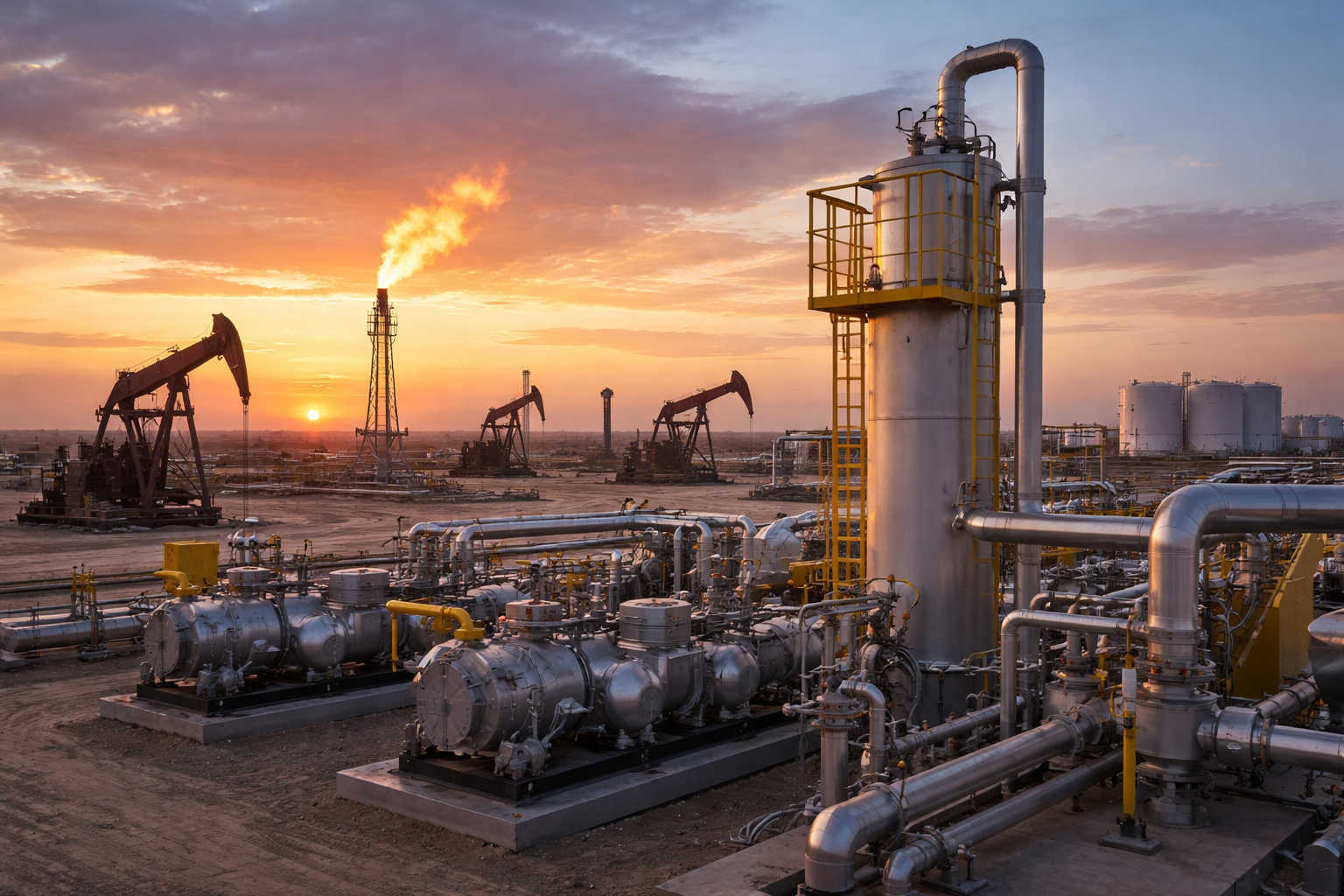
Many people see gas flaring as a necessary part of oil and gas
But that view is changing. Today’s operators face growing pressure to reduce emissions, improve efficiency, and get more value from every asset. That shift is driving greater interest in practical gas flaring solutions that do more than reduce waste in theory.
Flare gas recovery is one of the most practical and cost-effective options when conditions are right. Instead of burning usable gas, operators can capture it, compress it, and redirect it for reinjection, power generation, fuel use, or transport. Flare gas recovery systems help solve two problems at once: reducing flared volumes and creating value from a resource that would otherwise be wasted. For operators focused on compliance, cost control, and performance, flare gas recovery is more than an environmental measure. It is a strategic business decision.
What Are Gas Flaring Solutions?
Gas flaring solutions are methods used to reduce, capture, or repurpose gas that would otherwise be burned off. Operators often need them when associated gas cannot be used on-site or moved efficiently because of infrastructure limitations, remote field conditions, or temporary production challenges. While several approaches can help reduce flaring, flare gas recovery is often one of the most practical because it can turn wasted gas into a usable resource.
What Is Flare Gas Recovery?
Flare gas recovery is the process of capturing and conditioning gas for productive use instead of burning it as waste.
Recovered gas can be routed into several productive paths. It may be used on-site to fuel generators, heaters, or production equipment. It may also support reservoir pressure through reinjection. In other cases, operators may send the gas to gathering systems or prepare it for downstream use where infrastructure is available.
This matters because flare gas recovery changes the economics of flaring. Instead of viewing flare reduction only as a compliance burden, operators can treat it as an opportunity to reduce waste and recover value. That shift is especially important in oilfields with recurring flaring, rising emissions pressure, or little tolerance for resource loss. When the gas stream is suitable and the end use is clear, flare gas recovery becomes one of the strongest gas flaring solutions available.
How Flare Gas Recovery Systems Work
Flare gas recovery is not a one-size-fits-all solution, but it is often one of the most effective options because it addresses both environmental and economic concerns.
The most obvious benefit is reduced flare volume. Recovering gas instead of burning it prevents hydrocarbon waste and helps operators improve emissions performance. In regions with stricter rules on methane reduction and flare limits, recovery systems can play an important role in meeting operational and regulatory goals. EPA’s fact sheet supports the statement that methane controls are a major operational and regulatory issue and notes that gas recovery can keep usable gas from being wasted.
The business case often provides the strongest motivation. Recovered gas can offset fuel costs, reduce diesel use, support field operations, or create a path to monetization where the right infrastructure is in place. In other words, operators are not just reducing waste. They are recovering usable value from a stream that would otherwise generate no return.
Flare gas recovery also supports operational efficiency. Fields with recurring flaring often suffer from the same underlying issue: gas is available, but not being managed productively according to the 2025 Global Gas Flaring Tracker Report. Recovery systems help close that gap. They allow operators to reduce waste without waiting for a long-term infrastructure solution such as a permanent pipeline connection.
That combination of emissions reduction, improved efficiency, and revenue potential makes flare gas recovery one of the most practical gas flaring solutions for many oil and gas operations.
When Flare Gas Recovery Systems Make the Most Sense
Not every site is a fit for flare gas recovery, but certain conditions make it especially attractive.
Remote oilfields are one of the clearest examples. When gathering systems are not immediately available, operators often need a way to manage associated gas on-site. Flare gas recovery systems can help bridge the gap between production needs and infrastructure limitations.
Early production systems are another strong use case. In the early stages of development, permanent gas-handling infrastructure may still be under construction or not yet justified. A recovery system can reduce flaring during that period while allowing operators to put the gas to work.
Fields with steady associated gas volumes are also strong candidates. If flaring is frequent rather than occasional, the business case for recovery becomes easier to justify over time. The same logic applies to multi-well pads, temporary production setups, and operations facing tighter emissions requirements.
In general, flare gas recovery makes the most sense when three things align: a consistent gas stream, a practical end use, and a clear business reason to reduce flaring. When those elements are in place, recovery can be more effective than passive or temporary alternatives.
How to Choose the Right Flare Gas Recovery System
Choosing the right flare gas recovery system starts with understanding the gas itself. Volume matters, but so does flow consistency. Operators should evaluate not only how much gas is available, but also when it is available and how often peak flaring events occur. That information helps ensure the equipment is properly sized.
Gas composition is just as important as flow volume. Some streams are relatively easy to handle, while others require additional treatment to remove moisture, hydrogen sulfide, carbon dioxide, or other contaminants. Pressure requirements at the destination matter as well. Low-pressure fuel recovery requires different compression and equipment than high-pressure pipeline delivery or reinjection.
Site conditions should also influence system selection. If equipment needs to serve multiple locations, mobility becomes a priority. In those cases, modular or skid-mounted units are often the best choice. In remote fields, maintenance access and serviceability may be even more important than they are in centralized operations.
Finally, the economics need to be realistic. A sound evaluation should consider capital costs, operating requirements, avoided waste, fuel savings, compliance benefits, and the potential recovered value of the gas. The best system is not always the largest or most advanced. It is the one that matches the site’s gas profile, field constraints, and commercial goals.
Flare Gas Recovery vs. Other Gas Flaring Solutions
Operators have several options for addressing flaring, and each has a place depending on the asset.
Gas reinjection can be effective where reservoir strategy supports it, but it is not always the fastest or simplest solution. On-site power generation can be attractive, especially in remote operations with strong energy demand, but it depends on equipment compatibility and fuel quality. Pipeline or gathering system tie-ins are often ideal when available, yet they may be limited by cost, timing, or geography.
Flare gas recovery often compares well because it is flexible. It does not depend on a single infrastructure outcome or one narrow use case. Instead, it gives operators a way to capture gas and move it toward the productive use that makes the most sense for the site.
A simple way to think about it is this: other gas flaring solutions may solve the disposal problem, but flare gas recovery often does more to support both waste reduction and value creation. That is why it is frequently the preferred path for operations that need a practical and scalable answer.
Frequently Asked Questions
1. What are gas flaring solutions?
Gas flaring solutions are methods used to reduce or eliminate the burning of excess gas at oil and gas sites. These may include flare gas recovery, gas reinjection, on-site power generation, pipeline connections, and other strategies that redirect gas into productive use.
2. What is flare gas recovery?
Flare gas recovery is the capture of gas that would otherwise be burned at the flare. The gas is collected, usually compressed, and redirected for fuel use, reinjection, power generation, transport, or another application.
3. How do flare gas recovery systems work?
Flare gas recovery systems capture low-pressure gas before combustion, increase its pressure through compression, condition it if needed, and send it to a productive destination. System design depends on gas volume, composition, pressure, and end use.Lorem ipsum dolor sit amet, consectetur adipiscing elit. Ut elit tellus, luctus nec ullamcorper mattis, pulvinar dapibus leo.
4. What are the benefits of flare gas recovery?
The main benefits include:
- Reduced flaring
- Less hydrocarbon waste
- Improved emissions performance
- Better resource utilization
- Possible fuel savings or recovered value
5. When should operators use flare gas recovery systems?
Flare gas recovery systems are often most effective when flaring happens regularly, associated gas volumes are meaningful, and the gas can be used on-site or prepared for sale or other productive use.
6. Can flare gas recovery improve both compliance and profitability?
Yes. In the right setting, flare gas recovery can reduce emissions exposure while also recovering usable gas value. That makes it both a compliance-supporting solution and a commercial one.
Ready to Implement Your Custom Gas Flaring Solution?
Gas flaring solutions are no longer only about minimizing visible waste. They are increasingly about recovering value, improving efficiency, and adapting to the realities of modern oil and gas production. Among the available options, flare gas recovery stands out because it turns a routine loss into a usable asset. When matched to the right site conditions, flare gas recovery systems can reduce flaring, improve compliance, and support better operational performance.
If your operation is dealing with ongoing flaring, limited gas takeaway capacity, or increasing pressure to reduce emissions, now is the time to evaluate whether a flare gas recovery system makes sense for your field. Fill out our web form or contact our team at 806-669-3427 to discuss your site conditions, application requirements, and recovery goals so you can identify the right compression-based solution for your operation.