

Centrifugal Pumps
A Guide to Centrifugal Pump Operation, Applications, and Performance
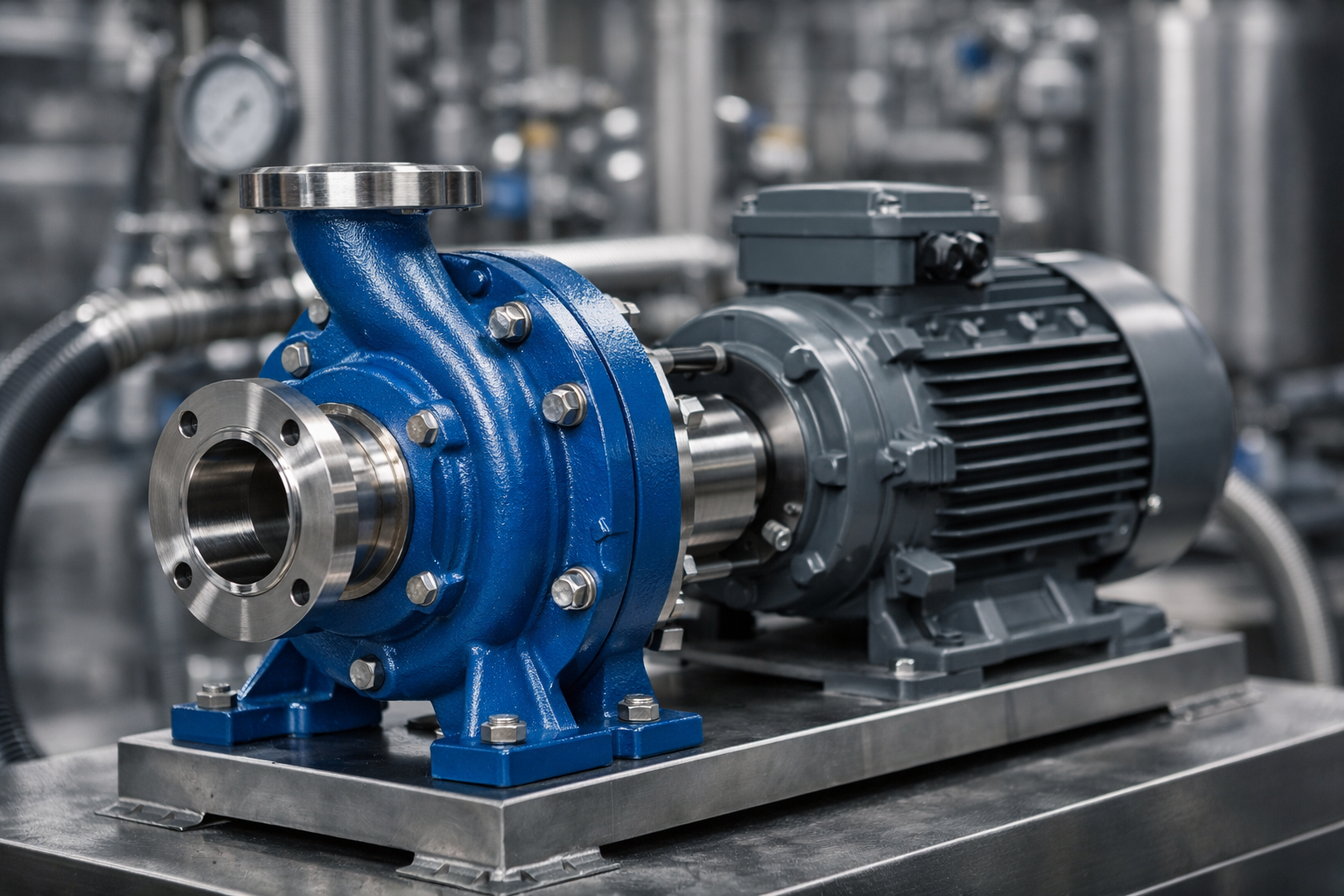
Centrifugal pumps are one of the most widely used types of industrial pumps, designed to move fluids efficiently using rotational energy. These pumps are ideal for handling low-viscosity liquids such as water, chemicals, and light oils, making them a common choice across industries including oil and gas, water treatment, and manufacturing.
Known for their simple design and ability to deliver continuous, high-volume flow, centrifugal pumps provide a reliable solution for many industrial fluid transfer applications.
Because of their versatility and efficiency, these industrial pump types are often considered the standard solution for fluid transfer in many industrial systems.
How Centrifugal Pumps Work
Centrifugal pumps operate using a rotating impeller that increases the velocity of the fluid. As fluid enters the pump, it is accelerated outward by the spinning impeller and directed into a volute or diffuser, where velocity is converted into pressure. To better understand how pump classifications work, see our guide to types of industrial pumps.
This process allows these pumps to move fluid efficiently while maintaining a steady, continuous flow, making them well-suited for systems that require consistent performance.
This type of pump is designed to operate continuously, making them ideal for systems that require consistent flow over long periods. Because they rely on rotational energy rather than displacement, they are best suited for fluids that can move easily, such as water and light chemicals.
Common Applications
This pump design is used across a wide range of industrial applications, including:
Water supply and distribution systems
Oil and gas processing
Chemical transfer and processing
HVAC and cooling systems
Wastewater treatment
Their ability to handle large volumes of fluid efficiently makes them a preferred choice in systems where steady flow and reliability are critical.
They are particularly effective in applications where fluid viscosity is low and system demand requires continuous operation rather than intermittent or precision-based flow control.
Advantages of This Type of Fluid Transfer System
Efficient for low-viscosity fluids
Simple design with fewer moving parts
Capable of handling high flow rates
Continuous, smooth operation
Lower maintenance requirements compared to complex pump systems
Their straightforward design also makes them easier to maintain and service compared to more complex pump systems.
Limitations of These Pump Systems
Not suitable for highly viscous fluids
May require priming before operation
Performance can decrease under high-pressure conditions
Less effective for applications requiring precise flow control
When to Use a Centrifugal Pump
These inddustrial pumps are best suited for applications that require steady, high-volume flow with relatively low pressure. They are commonly used when efficiency, simplicity, and reliability are priorities, particularly in systems handling water or other low-viscosity fluids.
Centrifugal Pumps vs. Other Pump Types
Unlike positive displacement pumps such as gear or diaphragm pumps, centrifugal pumps rely on velocity and rotational energy rather than trapping and moving fixed volumes of fluid. This makes them more suitable for high-flow applications but less effective for handling thick or highly viscous fluids.
Frequently Asked Questions
What is a centrifugal pump used for?
Centrifugal pumps are used to move low-viscosity fluids such as water, chemicals, and light oils in industrial systems that require continuous, high-flow operation.
How does a centrifugal pump work?
A centrifugal pump uses a rotating impeller to increase fluid velocity, which is then converted into pressure to move the fluid through the system.
What is the difference between a centrifugal pump and a positive displacement pump?
Centrifugal pumps move fluid using velocity and rotational energy, while positive displacement pumps move fluid in fixed volumes, making them better suited for viscous fluids.
Related Pump Types
To explore other industrial pump technologies and compare options, visit: