

Screw Pumps
A Guide to Screw Pump Operation, Applications, and Performance
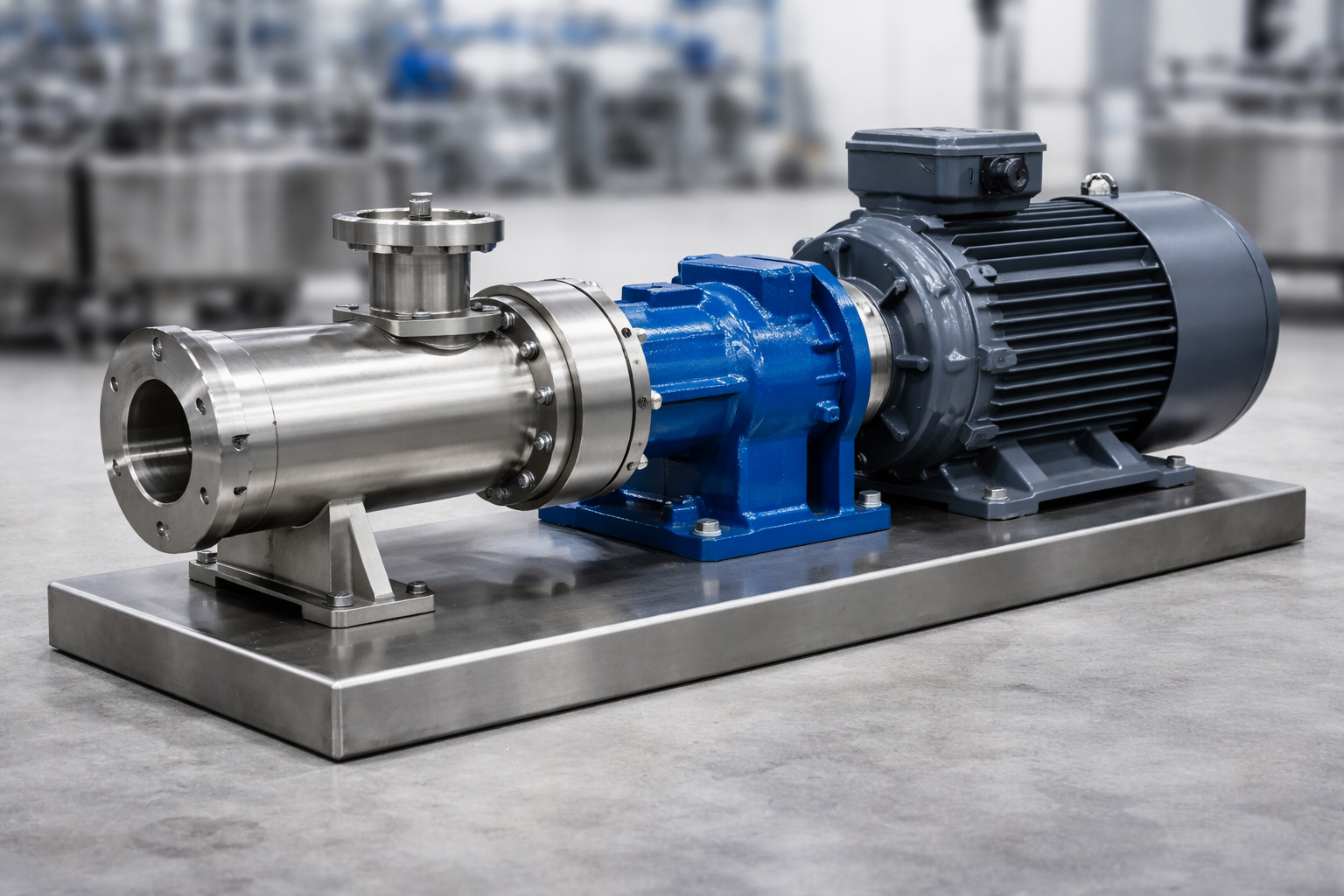
What Are Screw Pumps?
Screw pumps are a type of positive displacement pump that use one or more rotating screws to move fluid along the screw axis. These industrial pump types are designed to handle viscous fluids efficiently while providing smooth, continuous flow.
Because of their ability to move thick fluids without pulsation, screw pumps are widely used in industrial applications involving oil, fuel, sludge, and other high-viscosity materials.
How Screw Pumps Work
Screw pumps operate by rotating one or more screws inside a cylindrical casing. As the screws turn, fluid is trapped in the cavities between the screw threads and carried from the inlet to the outlet.
This design allows for steady, non-pulsating flow and minimal turbulence, making screw pumps ideal for applications where consistent fluid movement is critical. For a more detailed explanation, see how screw pumps operate.
Common Applications
Screw pumps are commonly used in applications involving viscous or sensitive fluids, including:
Oil and gas transfer
Fuel handling systems
Wastewater and sludge processing
Marine and industrial lubrication systems
Chemical processing
Their ability to handle thick fluids and maintain consistent flow makes them a reliable solution in demanding environments.
Advantages of Screw Pumps
Ideal for high-viscosity fluids
Smooth, non-pulsating flow
Capable of handling fluids with solids
Quiet operation with low vibration
High efficiency in continuous operation
Limitations of Screw Pumps
Higher initial cost compared to simpler pump types
Requires precise manufacturing and maintenance
Less efficient for low-viscosity fluids
Can be sensitive to dry running conditions
When to Use a Screw Pump
Screw pumps are best suited for applications that require smooth, continuous flow of viscous fluids. They are commonly used when minimizing pulsation and handling thick or sensitive materials is important.
Screw Pumps vs. Gear Pumps
While both screw pumps and gear pumps are positive displacement pumps, they differ in how they move fluid. Screw pumps provide smoother, non-pulsating flow, while gear pumps deliver more compact, high-pressure performance.
Screw pumps are often preferred for larger systems and higher flow rates, while gear pumps are commonly used for precision fluid control in smaller applications.
Frequently Asked Questions
What are screw pumps used for?
Screw pumps are used to move viscous fluids such as oil, fuel, and sludge in applications requiring smooth, continuous flow.
How do screw pumps work?
They use rotating screws to trap and move fluid along the screw axis from inlet to outlet.
Are screw pumps positive displacement pumps?
Yes, screw pumps are a type of positive displacement pump designed for consistent and efficient fluid transfer.
Related Pump Types
To explore other industrial pump technologies and compare options, visit: