

Types of Industrial Pumps
A Complete Guide to Pump Types, Applications, and Selection
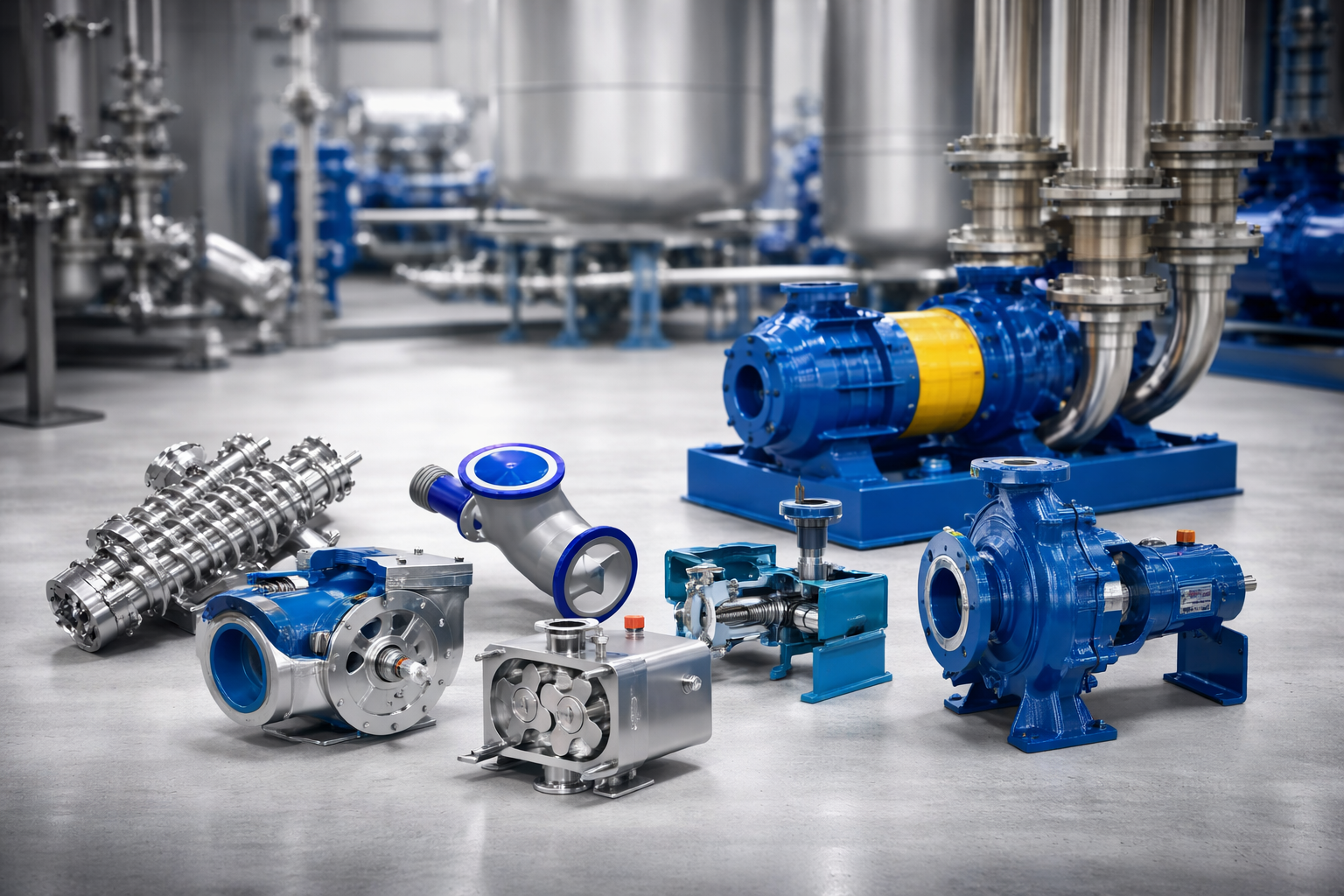
What Are the Main Types of Industrial Pumps?
Industrial pumps are used to move fluids in a wide range of applications, including water treatment, chemical processing, oil and gas systems, and manufacturing operations. These pumps are essential for transferring liquids efficiently and reliably in industrial environments.
There are several types of industrial pumps, each designed to handle specific flow rates, pressures, and fluid characteristics. Understanding the differences between pump types is critical for selecting the right equipment for your application.
Dynamic Pumps vs. Positive Displacement Pumps
Industrial pumps are generally classified into two main categories: dynamic pumps and positive displacement pumps.
Dynamic Pumps
Dynamic pumps use velocity to move fluid through a system. The most common example is the centrifugal pump, which uses a rotating impeller to increase fluid speed and convert it into pressure.
These pumps are best suited for:
High flow rates
Low-viscosity fluids
Continuous operation
Positive Displacement Pumps
Positive displacement pumps move fluid in fixed volumes using mechanical components such as gears, diaphragms, or screws.
These pumps are ideal for:
High-viscosity fluids
Precise flow control
High-pressure applications
For a deeper technical explanation, see how positive displacement pumps work.
Common Types of Industrial Pumps
Industrial pumps can be grouped into several categories based on how they move fluid and the types of applications they serve. The two primary classifications are dynamic pumps, such as centrifugal pumps, and positive displacement pumps, including gear, diaphragm, and screw pumps.
Each pump type is designed to handle specific flow rates, pressures, and fluid characteristics, making it important to understand their differences when selecting the right solution.
The most common types of industrial pumps include centrifugal pumps, gear pumps, diaphragm pumps, screw pumps, rotary vane pumps, and axial flow pumps.
Centrifugal pumps are the most widely used type of industrial pump, designed to move large volumes of low-viscosity fluids using rotational energy.
Best for:
Water systems
Chemical processing
HVAC and cooling systems
Gear pumps use interlocking gears to move fluid in fixed volumes, making them ideal for handling viscous fluids such as oils and fuels.
Best for:
Oil and lubrication systems
Fuel transfer
Chemical applications
Diaphragm pumps use a flexible diaphragm to safely move corrosive, abrasive, or hazardous fluids.
Best for:
Chemical processing
Wastewater treatment
Hazardous fluid handling
Screw pumps use rotating screws to move fluid smoothly and continuously, making them ideal for viscous or sensitive fluids.
Best for:
Oil and gas
Sludge handling
Marine systems
Rotary vane pumps use sliding vanes to create consistent flow and are commonly used in fuel transfer and refrigeration systems.
Best for:
Fuel transfer
HVAC systems
Vacuum applications
Axial Flow Pumps
Axial flow pumps move fluid along the axis of the pump and are designed for high-flow, low-pressure applications.
Best for:
Irrigation
Flood control
Water circulation
How to Choose the Right Pump Type
Selecting the right industrial pump depends on several key factors:
Fluid Type: Viscosity, corrosiveness, and solids content
Flow Rate: Required volume of fluid movement
Pressure Requirements: System demands
Application Environment: Temperature, safety, and operating conditions
Understanding these factors will help ensure optimal performance and longevity of your pump system.
Common Applications of Industrial Pumps
Industrial pumps are used across a wide range of industries and applications, including:
Oil and gas processing
Water and wastewater treatment
Chemical manufacturing
Food and beverage processing
Power generation and cooling systems
Each application may require a different pump type depending on fluid characteristics and system requirements.
Frequently Asked Questions
What are the main types of industrial pumps?
The most common types include centrifugal pumps, gear pumps, diaphragm pumps, screw pumps, rotary vane pumps, and axial flow pumps.
What is the difference between dynamic and positive displacement pumps?
Dynamic pumps use velocity to move fluid, while positive displacement pumps move fluid in fixed volumes using mechanical components.
Which pump is best for viscous fluids?
Positive displacement pumps such as gear pumps and screw pumps are best suited for handling viscous fluids.
Explore Individual Pump Types
Learn more about each type of industrial pump and how it applies to your system: