

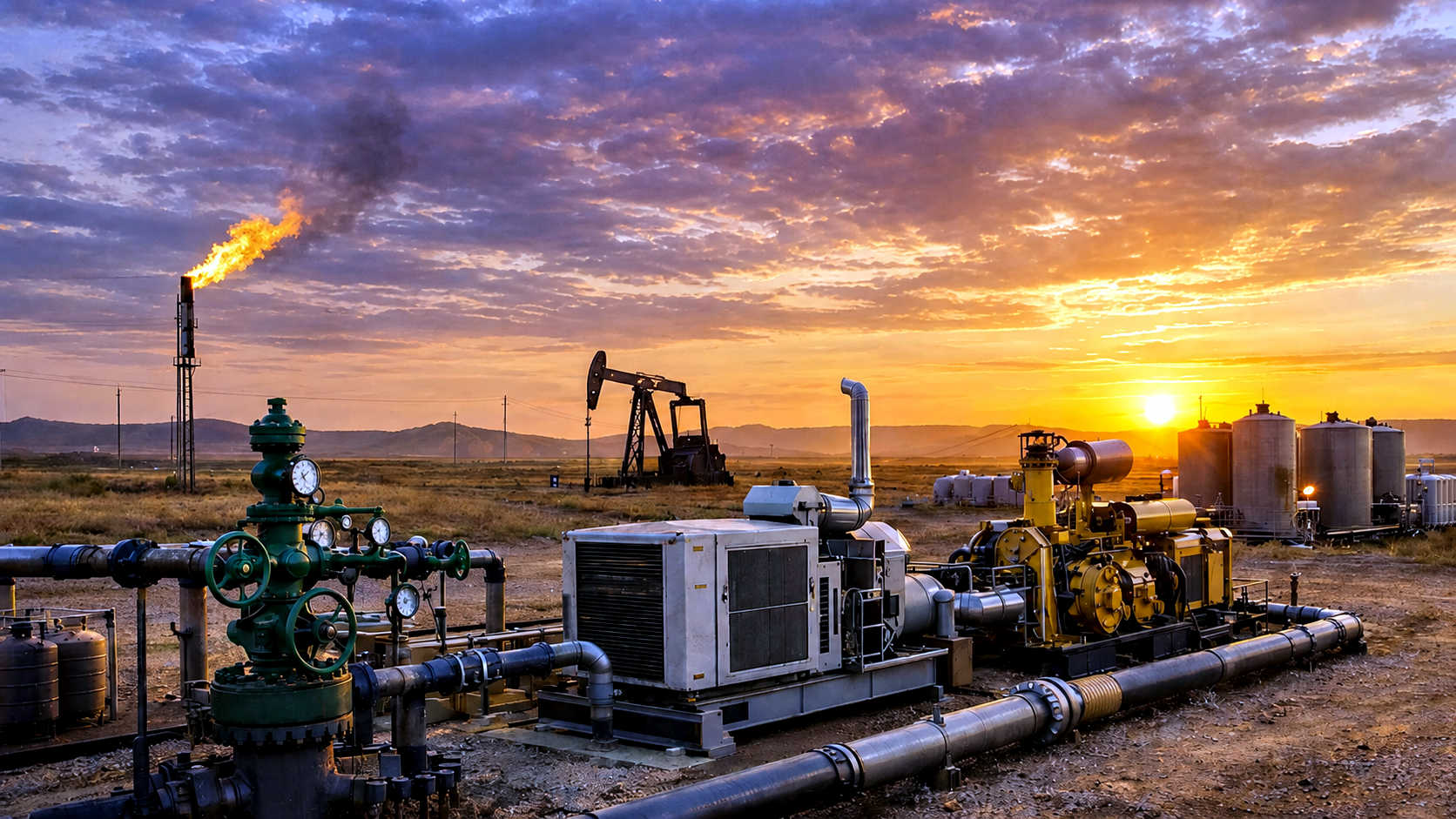
Many gas wells are not underperforming because the reservoir is depleted. They are underperforming because of line pressure. When backpressure builds in the gathering system, a well may still have recoverable gas in place, but it can no longer move efficiently into the sales line.
That is where wellhead compression can change the economics of an existing asset. A properly sized compressor can reduce flowing wellhead pressure, help stabilize production, improve gas flow, and give operators a practical way to increase revenue without drilling a new well.
For many operators, the smartest path is not buying a compressor package outright. It is renting or leasing wellhead compression equipment that fits the site, the flow profile, the pressure requirement, and the production goal.
Wellhead compression uses a compressor package near the wellhead to lower flowing pressure and move natural gas into the gathering or sales system more efficiently. Renting or leasing a wellhead compressor gives operators a faster, more flexible way to test production gains, manage capital, and scale compression as well conditions change.
The Hidden Production Killer: Line Pressure
As gathering systems mature, line pressure often increases. That backpressure restricts the flow path from the formation to the sales line. Even wells with remaining reserves can struggle when they are constantly fighting downstream pressure.
When line pressure rises, operators may see several problems at once:
- Gas flow declines
- Liquids begin loading up
- Wells become unstable or “die” prematurely
- Daily revenue drops
- Operators start considering costly interventions
In many cases, the issue is not the rock. It is pressure. If the well still has recoverable gas, reducing backpressure may help bring production back into a more profitable operating range.
What Wellhead Compression Actually Does
Small wellhead compressors reduce flowing wellhead pressure so gas can move more efficiently into the pipeline system. By lowering the pressure the well has to overcome, compression can support stronger and more stable flow from the wellbore.
Depending on site conditions, properly engineered wellhead compression can help operators:
- Increase daily MCF production
- Stabilize declining wells
- Extend the economic life of marginal wells
- Improve gas recovery from existing assets
- Reduce liquid loading problems
- Improve cash flow from wells already in the field
The equipment configuration matters. MidWest Compressor Systems offers natural gas compression options for wellhead gas, vapor recovery, gas plant, and bio-gas applications, including electric and gas engine drive units, screw compressor packages, liquid ring packages, and trailer-mounted test units. That gives operators flexibility when choosing the right rental or lease package for the application.
When should an operator consider wellhead compression? Consider wellhead compression when a well still has recoverable gas but production is restricted by line pressure, unstable flow, liquid loading, or pressure-related decline.
Why Renting or Leasing a Wellhead Compressor Makes Financial Sense
Many operators hesitate because they associate compression with a large capital purchase. That can be true when a company buys, owns, and maintains equipment directly. But rental and lease options change the decision entirely.
Renting or leasing wellhead compression gives operators a way to pursue production optimization without tying up capital in equipment ownership. Instead of committing to a long-term asset purchase before proving the production response, operators can deploy compression, evaluate performance, and adjust as conditions change.
A rental or lease approach can help operators:
- Preserve capital for drilling, workovers, acreage, or other priorities
- Deploy equipment faster when production problems are costing money
- Match operating expense to production revenue
- Scale compression up or down as well conditions change
- Avoid long-term ownership risk on equipment that may not fit the next application
- Access service and support from a compression-focused team
In volatile natural gas markets, flexibility matters. A leased electric or gas-driven compressor can help operators improve production while avoiding the burden of purchasing equipment that may be oversized, undersized, or unnecessary after a temporary production challenge is resolved. See U.S. Energy Information Administration natural gas overview.
Common Wellhead Compression Rental and Lease Applications
Wellhead compression is not limited to one type of producer or one type of field. It can be useful anywhere line pressure, low-flow conditions, or vapor recovery opportunities are affecting site economics.
1. Marginal Wells Near Economic Limits
Marginal wells often get written off too early. Many still have recoverable natural gas reserves, but they need lower flowing pressure to produce profitably. Renting a small compressor can help determine whether the well can be stabilized before larger capital decisions are made.
2. Shut-In or Intermittent Wells
A well that has been shut in or cycling intermittently may be a candidate for compression if backpressure is limiting flow. A rental compressor gives the operator a practical way to test the production response before making a longer-term commitment.
3. Remote Well Sites
Remote locations may not have reliable grid power. Gas engine drive compressor packages can be a strong fit where operators need flexible deployment and proven field performance without depending on electric infrastructure.
4. Sites with Reliable Power
Electric compressor packages may be a good option where stable power is available. They can support consistent operation, reduce on-site emissions, and simplify certain maintenance considerations.
5. Vapor Recovery Opportunities
Storage tanks and production equipment can release natural gas vapors that may otherwise be lost. Vapor recovery units, commonly called VRUs, capture gas vapors and route them back into the sales line or usable gas stream. For operators, vapor recovery is not only an emissions strategy. It can also be a revenue recovery strategy. Learn more about the EPA Natural Gas STAR Program.
Is a rental compressor only for short-term use? No. A rental compressor can be used for short-term production testing, temporary pressure problems, seasonal needs, or longer-term field operations when ownership is not the best financial fit.
Electric vs. Gas-Driven Wellhead Compressors
Choosing between electric and gas-driven compression depends on the site. The right choice is not based on preference alone. It depends on available power, pressure conditions, flow rate, site accessibility, emissions goals, and the expected operating period.
| Factor | Electric Wellhead Compressor | Gas-Driven Wellhead Compressor |
|---|---|---|
| Best Fit | Sites with reliable electric power and steady operating conditions. | Remote locations or sites where grid power is unavailable or unreliable. |
| Power Source | Uses available electrical infrastructure. | Uses a gas engine drive, often powered by field gas or available fuel supply. |
| Deployment Considerations | May require access to stable power before installation. | Can be easier to deploy in remote fields where electrical service is limited. |
| Operating Advantages | Can support consistent operation, reduced on-site emissions, and simplified maintenance in the right setting. | Offers flexibility for field operations where mobility, remote access, and independence from grid power matter. |
| Common Rental or Lease Use | Longer-term compression support at powered production sites, gas plants, or locations with stable infrastructure. | Wellhead compression rentals for marginal wells, intermittent wells, remote leases, and temporary production testing. |
| Key Decision Point | Choose electric when power availability, emissions goals, and site conditions support it. | Choose gas-driven when the site needs flexible compression without relying on electrical infrastructure. |
The key is proper sizing and engineering. Too much compressor can waste money. Too little compressor will not solve the pressure problem. A rental and lease partner should help evaluate conditions before recommending a package. See field service support for more details.
Why Proper Sizing Matters Before You Rent or Lease
Wellhead compression is not a one-size-fits-all decision. A compressor package should match the well’s current conditions and the operator’s production objective. Before renting or leasing equipment, an operator should consider inlet pressure, discharge pressure, flow rate, gas composition, power availability, liquid handling concerns, runtime expectations, and service access.
That evaluation helps determine whether a small screw compressor package, liquid ring package, vapor recovery unit, electric drive unit, gas engine drive unit, or test unit is the right fit.
MidWest Compressor Systems offers screw compressor packages such as MC-8, MC-10, MC-12, and MC-17 options across different horsepower ranges, along with MC-LR liquid ring packages. The goal is not simply to place a compressor on location. The goal is to place the right package on location so the operator can improve flow while controlling cost.
What information is needed to size a wellhead compressor? At minimum, operators should be prepared to discuss current production, suction pressure, discharge pressure, gas composition, power availability, and the performance problem they are trying to solve.
Small Compression Can Create Big Impact on Existing Wells
In today’s market, drilling new wells is not always the most efficient path to growth. Optimizing existing assets can deliver meaningful gains with less risk and less upfront capital. Small wellhead compression can support that strategy by helping operators recover gas they are already sitting on.
When installed at the right time, compression can help flatten decline curves, stabilize wells longer, improve field-wide pressure management, and extend the productive life of existing assets. It can also help operators make better decisions about which wells deserve continued investment and which wells may no longer justify additional work.
That makes compression more than an equipment decision. It is a production strategy.
National Wellhead Compression Rentals and Leasing Support
MidWest Compressor Systems supports oil and gas operators across the United States with natural gas compression products for sale, lease, and rent. For operators dealing with backpressure, marginal production, vapor recovery opportunities, or changing field conditions, renting or leasing can provide the flexibility needed to move quickly.
The right compression partner should help evaluate your well conditions, recommend properly sized equipment, provide rental or lease options, deliver field-ready support, and help reduce costly downtime. Every minute equipment is down can affect production numbers, so dependable support matters as much as the compressor package itself.
The Bottom Line: Rent or Lease the Compression You Need Before Production Slips Further
If your wells are producing below potential, the issue may not be the reservoir. It may be backpressure. Lowering line pressure can increase flow, capture more gas, reduce lost revenue, and extend well life.
A rented or leased wellhead compressor gives operators a practical way to pursue those gains without committing to unnecessary equipment ownership. Whether the need is a small compressor package, electric unit, gas-driven unit, trailer-mounted test unit, or vapor recovery solution, the right rental or lease setup can help improve production economics quickly.
Ready to rent or lease a wellhead compressor? Contact MidWest Compressor Systems to discuss your well conditions, pressure challenges, and equipment needs. The team can help you evaluate the right compression package for your site and determine whether rental or leasing is the best fit.
FAQs About Wellhead Compression Rentals and Leasing
What is wellhead compression?
Wellhead compression uses a compressor near the wellhead to lower flowing pressure and help natural gas move more efficiently into the gathering or sales system.
Can I rent a wellhead compressor instead of buying one?
Yes. Renting or leasing a wellhead compressor allows operators to deploy compression without purchasing equipment outright. This can be useful for production testing, marginal wells, remote locations, or changing field conditions.
Why lease a compressor package?
Leasing can help preserve capital, reduce ownership risk, improve deployment flexibility, and allow operators to match compression expense more closely to production revenue.
What type of compressor is best for a remote well site?
A gas engine drive compressor package is often a strong fit for remote sites without reliable grid power. The best choice depends on pressure, flow rate, power availability, and operating goals.
Does MidWest Compressor Systems support wellhead compression nationwide?
Yes. MidWest Compressor Systems serves oil and gas businesses across the United States with natural gas compression products for sale, lease, and rent. Learn more about OSHA Oil and Gas Well Drilling and Servicing.