

GAS JACK COMPRESSORS IN MIDLAND, TX
Gas Jack compressor rental, sales, and field support for Midland-area oil and gas operations.
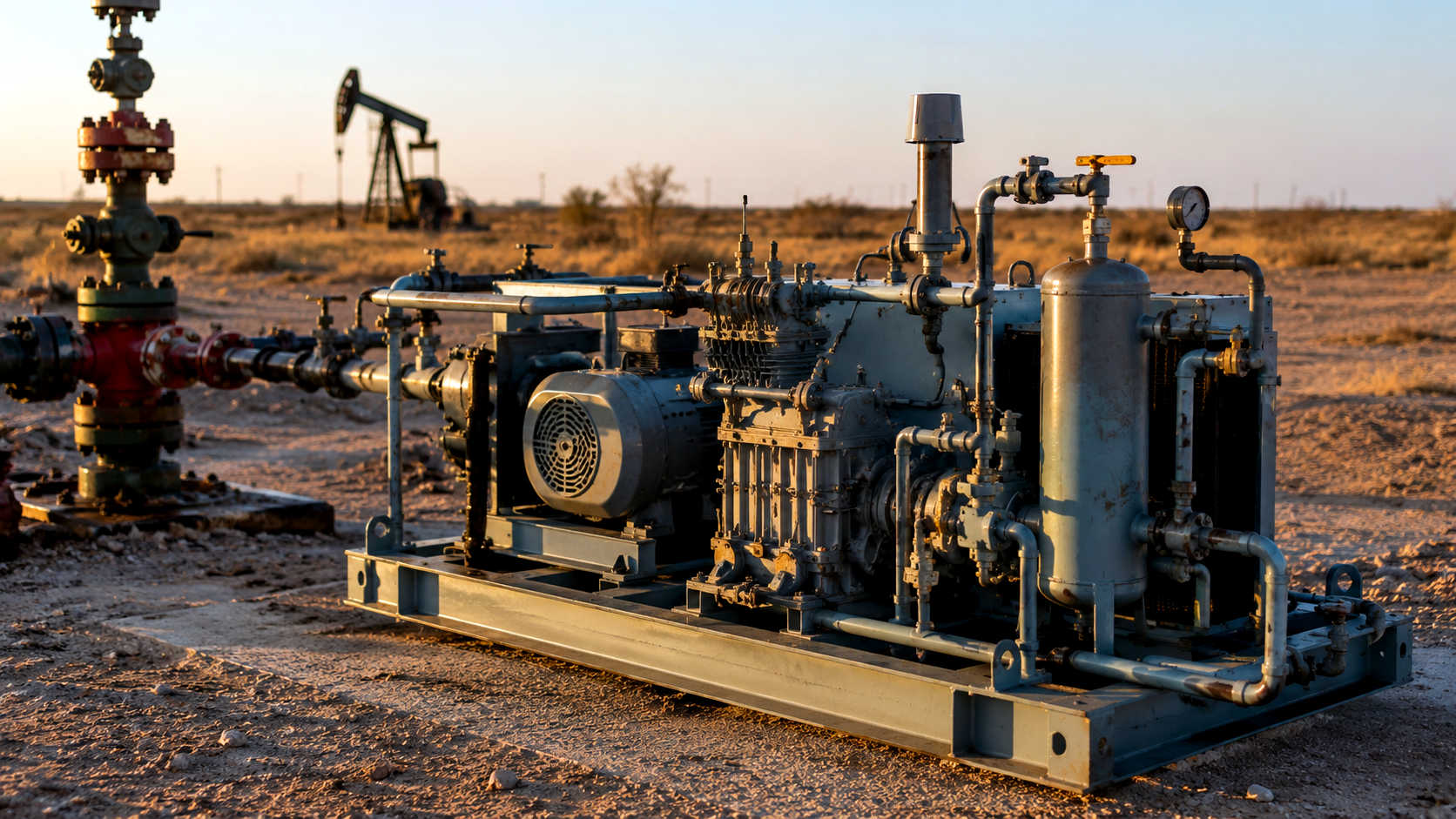
What Are Gas Jack Compressors?
Gas Jack compressors are compact, gas-powered reciprocating compressor packages designed primarily for wellhead compression. They are commonly used on mature or low-pressure oil and natural gas wells where declining well pressure makes it difficult for produced gas to enter a higher-pressure gathering or sales line.
Unlike conventional compressor packages that use a separate engine and compressor, a Gas Jack package integrates the power and compression functions into one unit. Natural gas from the well powers part of the engine, while the remaining cylinders compress the produced gas for delivery into the downstream system.
For oil and gas operations in Midland and across the Permian Basin, this compact configuration can provide practical wellhead compression where space, changing fluid conditions, and lower gas volumes must be considered.
How Gas Jack Compressors Work
A Gas Jack compressor uses a modified natural gas engine as both the driver and the compressor. One bank of cylinders burns field gas to power the unit, while the opposing cylinders perform the compression work. The reciprocating movement draws lower-pressure gas into the compression cylinders, reduces its volume, and discharges it at the pressure needed to enter a gathering or sales line.
Gas Jack packages may also combine compression, fluid separation, and optional gas measurement on a single skid. This integrated arrangement can reduce the amount of separate equipment required at the well site and helps the package accommodate variable fluid conditions often encountered in producing oil and gas wells.
Common Oil and Gas Applications
Gas Jack compressors are used in lower-volume natural gas and oilfield applications, including:
- Wellhead compression for mature or declining-pressure wells
- Moving produced gas into higher-pressure gathering lines
- Supporting low-volume natural gas production
- Reducing wellhead backpressure
- Separating liquids from the produced gas stream
- Recovering gas that might otherwise be vented or flared
- Supporting marginal or late-life well production
These applications make Gas Jack compressors a practical option for operators seeking compact, field-ready compression at lower-volume or declining-pressure well sites.
Advantages of Gas Jack Compressors
Gas Jack compressors can offer several practical advantages for lower-volume natural gas and oilfield applications:
- Compact, skid-mounted configuration
- Designed for wellhead compression
- Ability to operate using field gas
- Integrated power and compression functions
- Reduced need for a separate driver package
- Practical fit for mature or declining-pressure wells
- Support for lower-volume production
- Ability to reduce wellhead backpressure
- Configurations that may incorporate fluid separation
- Field-ready design for remote oil and gas locations
The right compressor solution depends on site conditions and production goals. Midwest Compressor can evaluate gas volume, suction and discharge pressure, gas composition, fluid content, and anticipated project duration to determine whether a Gas Jack compressor is the right fit for the application.
Limitations of Gas Jack Compressors
Gas Jack compressors are designed for specific wellhead and lower-volume compression applications. Potential limitations may include:
- Limited horsepower and capacity compared with larger compressor packages
- Best suited for lower-volume wellhead applications
- Operating pressure and compression-ratio limits determined by the package configuration
- Performance that depends on proper sizing for the well’s gas volume and pressure conditions
- Natural gas consumption when field gas powers the unit
- Reciprocating components that require routine inspection and maintenance
- Potential gas leakage from packing, valves, seals, or other components if they are worn or improperly maintained
- Need for appropriate fluid separation when the produced gas contains liquids
- Possible production interruptions during scheduled or unscheduled maintenance
- Less suitable for higher-volume gathering or centralized compression applications
Careful equipment sizing is essential. Gas volume, suction pressure, discharge pressure, gas composition, fluid content, temperature, and anticipated changes in well performance should be reviewed before selecting a Gas Jack compressor. Project duration, expected utilization, maintenance responsibility, and available capital should also be considered when renting versus buying natural gas compression equipment.
When to Use a Gas Jack Compressor
A Gas Jack compressor may be a practical option when a producing well needs compact, lower-volume wellhead compression. These packages are especially useful when declining well pressure makes it difficult for gas to enter a higher-pressure gathering or sales line.
Because Gas Jack compressors combine the power and compression functions within one package, they may also suit remote well sites where available space, field gas, fluid conditions, and equipment simplicity are important considerations.
Common situations may include:
- Mature or declining-pressure natural gas wells
- Lower-volume wellhead compression
- Wells experiencing excessive gathering-line backpressure
- Oil wells producing associated natural gas
- Marginal or late-life production support
- Sites where field gas can be used to power the unit
- Locations requiring a compact, skid-mounted package
- Applications that may benefit from integrated fluid separation
- Temporary compression needs while well conditions are evaluated
- Projects where rental equipment offers greater flexibility than immediate ownership
The best compressor solution depends on the specific well and site conditions. Midwest Compressor can help Midland-area operators compare equipment options based on gas volume, suction and discharge pressure, fluid content, gas composition, operating environment, and anticipated project duration.
Gas Jack Compressors vs. Conventional Reciprocating Compressors
Gas Jack compressors and conventional reciprocating compressor packages both use piston-driven compression, but their package designs and intended applications differ.
A Gas Jack compressor is a compact, low-horsepower unit that integrates the natural gas engine and compressor functions into one package. Field gas powers one bank of engine cylinders, while the opposing bank compresses produced gas. This integrated design is primarily suited to wellhead compression and production enhancement on lower-volume wells.
Conventional reciprocating packages typically use a separate engine or electric motor to drive the compressor. They are available in a much broader range of horsepower, capacity, pressure, and multi-stage configurations, making them suitable for larger wellhead, gathering, processing, and pipeline applications. Gas Jack packages have historically been positioned as compact alternatives to conventional packages using separate drivers.
| Factor | Gas Jack Compressors | Conventional Reciprocating Compressors |
|---|---|---|
| Package design | Integrated engine and compressor functions | Separate engine or motor and compressor |
| Typical horsepower | Low-horsepower configuration | Available across a much broader horsepower range |
| Primary application | Lower-volume wellhead compression and production enhancement | Wellhead, gathering, processing, transmission, and other compression applications |
| Footprint | Compact skid designed for well-site installation | Package size varies and may be substantially larger |
| Power source | Commonly powered by natural gas from the well | Natural gas engine, electric motor, or another separate driver |
| Gas volume | Best suited to lower-volume production | Can accommodate moderate- to high-volume applications depending on configuration |
| Pressure capability | Limited by the specific low-horsepower package design | Broader pressure and compression-ratio capabilities |
| Fluid handling | May combine compression, fluid separation, and optional metering on one skid | Separation and other support equipment may be installed as separate package components |
| Mobility | Relatively compact and easy to transport between well sites | Mobility depends on package size and configuration |
| Maintenance focus | Integrated engine-compressor components, cylinders, valves, packing, and associated systems | Driver, compressor frame, cylinders, valves, rods, packing, and auxiliary systems |
| Best fit | Mature, declining-pressure, marginal, or liquid-loaded wells | Larger or more demanding compression applications requiring greater capacity or flexibility |
Operators evaluating lower-volume, temporary, or space-constrained applications may also want to review small natural gas compressor packages based on the site’s pressure, gas volume, fluid content, and operating requirements.
Frequently Asked Questions
What is a Gas Jack compressor used for?
A Gas Jack compressor is primarily used for lower-volume wellhead compression and production enhancement. It can help move produced gas into a higher-pressure gathering line, reduce wellhead or casing pressure, support liquid-loaded wells, and improve production from mature or declining-pressure wells.
How does a Gas Jack compressor work?
A Gas Jack compressor integrates the power and compression functions into one package. Natural gas from the well powers one bank of engine cylinders, while the opposing bank compresses the produced gas for delivery into a gathering or sales line.
Are Gas Jack compressors suitable for natural gas wells?
Yes. Gas Jack compressors are designed for selected natural gas well applications, particularly mature, lower-volume, declining-pressure, or liquid-loaded wells. Proper sizing must account for gas volume, suction and discharge pressure, fluid content, gas composition, and anticipated changes in production.
What is the difference between a Gas Jack compressor and a conventional reciprocating compressor?
A Gas Jack compressor is a specialized reciprocating package that combines the natural gas engine and compressor functions in one compact unit. Conventional reciprocating packages generally use a separate engine or electric motor and are available in broader horsepower, capacity, pressure, and multi-stage configurations.
Can Gas Jack compressors handle changing gas volumes?
Gas Jack compressors can support wells with changing production conditions when the package is properly selected and operated within its intended range. Significant changes in gas volume, pressure, or fluid content may require adjustments, reconfiguration, or a different compressor package.
Gas Jack units are documented as compact, natural-gas-powered, low-horsepower packages used for wellhead compression and production enhancement, with some configurations also providing fluid separation and optional metering from one skid.
Are Gas Jack compressors available for rent in Midland, TX?
Midwest Compressor provides Gas Jack compressor rental, sales, and field support for oil and gas operations in Midland and throughout the Permian Basin. Equipment availability and package suitability depend on the required gas volume, suction and discharge pressure, gas composition, fluid content, site conditions, and anticipated project duration.
What information is needed to select a Gas Jack compressor?
Operators should provide the anticipated gas volume, suction pressure, discharge pressure, gas composition, fluid content, operating temperature, well location, available field gas, and expected project duration. This information helps determine whether a Gas Jack compressor is appropriate and how the package should be configured.
Gas Jack Compressor Solutions for Midland-Area Operations
Choosing the right compression equipment requires more than selecting a compressor type. The package must be matched to the well’s gas volume, pressure requirements, fluid conditions, operating environment, production goals, and expected project timeline.
Midwest Compressor helps oil and gas operators evaluate Gas Jack compressor rental and purchase options for projects in Midland and throughout the Permian Basin. Our team can review your operating requirements and help identify a practical, field-ready compression solution for the application.