

Screw Compressors in Midland, TX
Screw compressor rental, sales, and field support for Midland-area oil and gas operations.
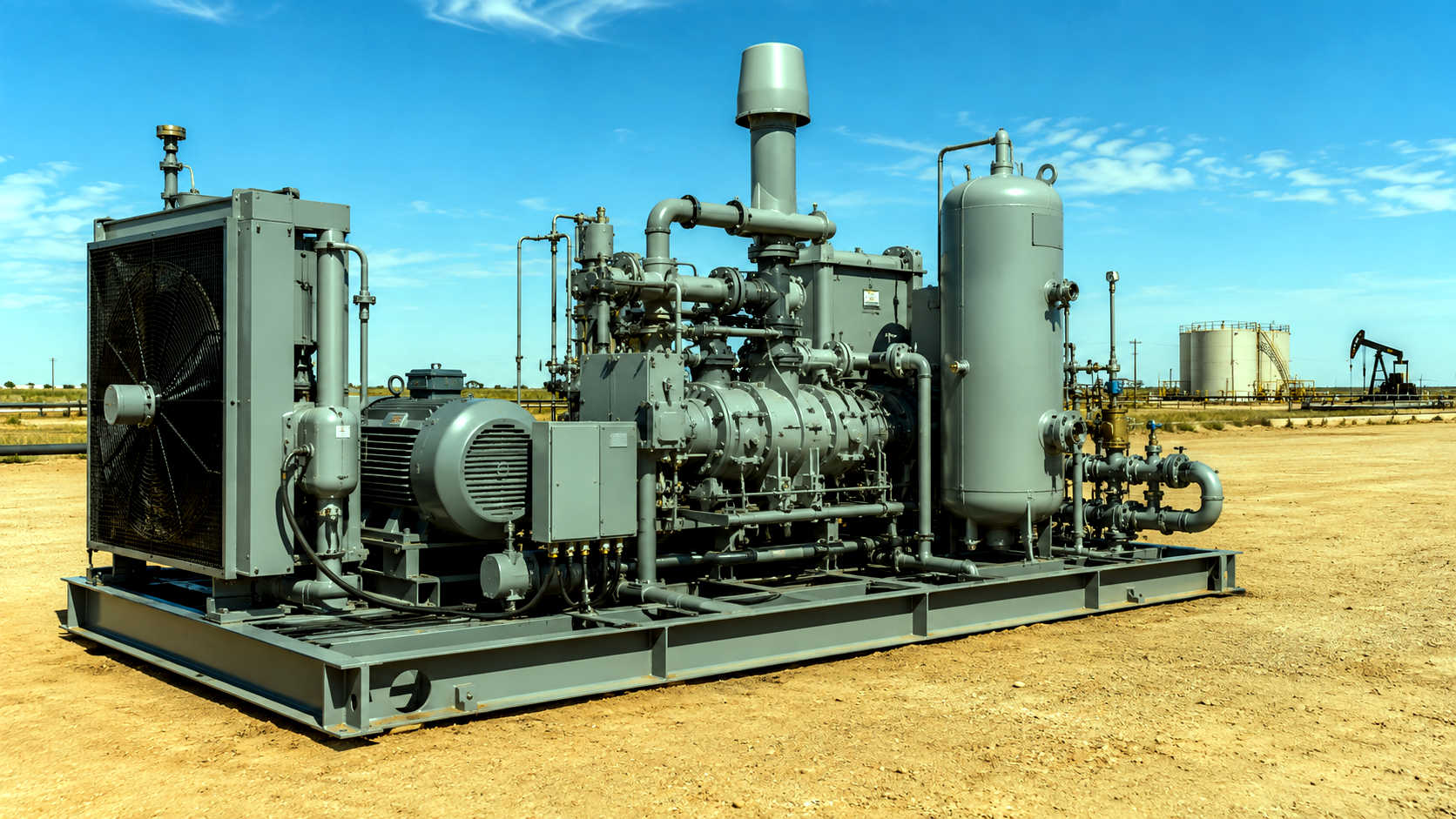
What Are Screw Compressors?
Screw compressors are positive displacement compressors that use two intermeshing helical rotors to increase the pressure of natural gas. As the rotors turn, gas is drawn into the compressor, trapped between the rotor profiles and casing, and moved toward the discharge end at a higher pressure.
For oil and gas operations in Midland and across the Permian Basin, screw compressors can provide steady gas flow in applications where operating conditions, gas volumes, or pressure requirements may change over time.
How Screw Compressors Work
Inside a rotary screw compressor, two precisely fitted rotors rotate within a sealed housing. Gas enters through the suction side and fills the spaces between the rotors. As the rotors continue turning, those spaces become smaller, compressing the gas before it exits through the discharge connection.
This continuous compression process produces relatively smooth, low-pulsation flow. Screw compressor packages can also be configured with separators, coolers, controls, piping, and other components needed for field operation.
Common Oil and Gas Applications
Screw compressors are used in a variety of natural gas and oilfield applications, including:
- Wellhead compression and production gas support
- Low-pressure gas gathering
- Vapor recovery and gas capture
- Tank vapor compression
- Gas boosting into gathering systems
- Flare gas recovery
- Temporary production support
- Applications with changing gas volumes or inlet conditions
For Midland-area operators, the appropriate compressor package depends on factors such as suction pressure, discharge pressure, gas volume, gas composition, temperature, site conditions, and the expected project duration.
Advantages of Screw Compressors
Screw compressors can offer several practical advantages for natural gas and oilfield applications:
- Smooth, continuous gas flow
- Relatively low pulsation and vibration
- Compact skid-mounted configurations
- Reliable performance during continuous operation
- Ability to accommodate changing gas volumes and inlet conditions
- Fewer moving parts than many reciprocating compressor designs
- Flexible package options for temporary or long-term projects
- Suitability for selected low- and moderate-pressure applications
The right compressor type depends on the operating conditions of the site. Midwest Compressor can help evaluate gas volume, pressure requirements, gas composition, and project duration to determine whether a screw compressor is the best fit for the application.
Limitations of Screw Compressors
Screw compressors are not the best choice for every natural gas application. Potential limitations may include:
- Lower efficiency at operating conditions outside the compressor’s intended range
- Pressure-ratio limitations compared with some reciprocating compressor configurations
- Performance that depends on proper gas conditioning and package design
- Oil carryover concerns with oil-flooded screw compressors if separation is not properly maintained
- Specialized maintenance requirements for rotors, bearings, seals, and lubrication systems
- Possible need for additional cooling, separation, or filtration equipment
- Higher equipment cost than some simpler compression solutions
Careful equipment sizing is important. Gas composition, inlet pressure, discharge pressure, flow rate, temperature, and anticipated operating changes should all be reviewed before selecting a screw compressor package. Project duration, anticipated utilization, maintenance responsibility, and available capital should also be considered when renting versus buying natural gas compression equipment.
When to Use a Screw Compressor
A screw compressor may be a strong option when an operation requires steady, continuous gas compression and relatively smooth flow. These packages can be useful when gas volumes or inlet conditions vary and when a compact, skid-mounted solution is preferred. For temporary projects or changing operating conditions, operators may also evaluate available screw compressor rental options before committing to equipment ownership.
Common situations may include:
- Low-pressure natural gas gathering
- Wellhead and production support
- Vapor recovery
- Flare gas capture
- Tank vapor compression
- Temporary compression needs
- Projects requiring continuous operation with relatively low pulsation
The best compressor type depends on the specific site conditions. Midwest Compressor can help Midland-area operators compare equipment options based on pressure requirements, gas volume, gas composition, operating environment, and project duration.
Screw Compressors vs. Reciprocating Compressors
Screw compressors and reciprocating compressors are both positive displacement compressor types, but they operate differently.
Screw compressors use rotating helical rotors to provide continuous compression with relatively smooth gas flow and low pulsation. They are often considered for applications involving variable gas volumes, compact package requirements, and continuous-duty operation.
Reciprocating compressors use pistons moving within cylinders. They can be well suited for higher discharge pressures, higher compression ratios, and applications requiring staged compression across a broad operating range.
| Factor | Screw Compressors | Reciprocating Compressors |
|---|---|---|
| Compression process | Continuous rotary compression | Intermittent piston compression |
| Gas flow | Smooth with relatively low pulsation | Pulsating unless dampened |
| Pressure capability | Commonly used for selected low- and moderate-pressure applications | Often suitable for higher pressures and compression ratios |
| Footprint | Frequently compact and skid-mounted | May require a larger package depending on configuration |
| Changing gas volume | Can accommodate certain variable-flow conditions | Can be configured for a wide range of operating conditions |
| Maintenance | Focused on rotors, bearings, seals, oil, and separation systems | Focused on valves, pistons, rings, rods, cylinders, and packing |
| Best fit | Depends on gas conditions and required operating range | Depends on gas conditions and required operating range |
Operators evaluating lower-volume, temporary, or space-constrained applications may also want to review small natural gas compressor packages based on the site’s pressure, flow, and operating requirements.
Frequently Asked Questions
What are screw compressors used for?
Screw compressors are used to increase the pressure of natural gas for applications such as wellhead compression, gas gathering, vapor recovery, flare gas capture, tank vapor compression, and temporary production support.
How do screw compressors work?
Screw compressors use two intermeshing helical rotors inside a sealed housing. As the rotors turn, they draw gas into the compressor, reduce the space containing the gas, and discharge it at a higher pressure.
Are screw compressors suitable for natural gas?
Yes. Screw compressors can be configured for natural gas applications when the package is properly selected for the gas composition, inlet pressure, discharge pressure, flow rate, temperature, and operating environment.
What is the difference between a screw compressor and a reciprocating compressor?
A screw compressor uses rotating rotors to provide continuous compression with relatively smooth gas flow. A reciprocating compressor uses pistons moving inside cylinders and may be better suited for higher pressures or larger compression ratios. The right choice depends on the operating conditions.
Can screw compressors handle changing gas volumes?
Screw compressors can accommodate certain changes in gas volume and inlet conditions, depending on the compressor design and package controls. Site-specific operating data should be reviewed before equipment is selected.
Are screw compressors available for rent in Midland, TX?
Midwest Compressor provides compressor rental, sales, and field support for oil and gas operations in Midland and the Permian Basin. Equipment availability and package suitability depend on the required pressures, gas volume, gas composition, site conditions, and project duration.
What information is needed to select a screw compressor?
Operators should provide the anticipated suction pressure, discharge pressure, gas volume, gas composition, operating temperature, site location, required driver type, and expected project duration. This information helps determine whether a screw compressor is appropriate and how the package should be configured.
Screw Compressor Solutions for Midland-Area Operations
Choosing the right compression equipment requires more than selecting a compressor type. The package must be matched to the gas stream, pressure requirements, expected production conditions, operating environment, and project timeline.
Midwest Compressor helps oil and gas operators evaluate screw compressor rental and purchase options for projects in Midland and throughout the Permian Basin. Our team can review your operating requirements and help identify a practical compression solution for the application.